

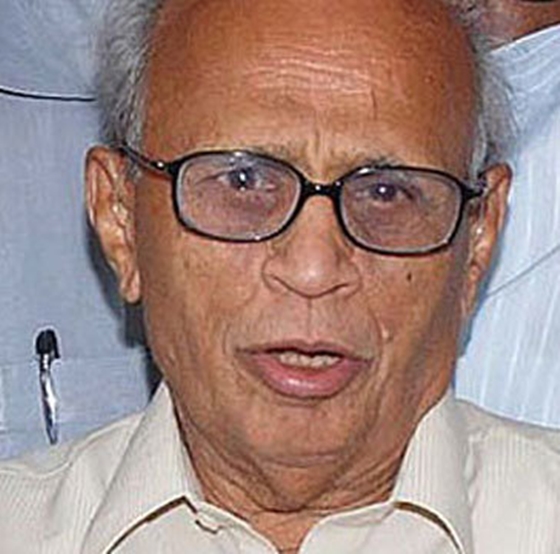
He was born on February 12, 1928, in Ahmedabad in the state of Gujarat. Ebrahim attended the Gujrat Vidyapith and received an undergraduate degree in law in 1949. He also studied courses based on philosophy and attended lectures given by Mohandas Karamchand Gandhi. It is believed that his advocacy for non-violence and peace came from Gandhi’s teachings.
In the year 1950, Ebrahim migrated to Pakistan and attended Sindh Muslim Law College. He received LLM degree and an honorary Juris Doctor in 1960 and later established his own law firm by the name of Fakhruddin G. Ebrahim & Company.
Ebrahim also served as the Attorney General of Pakistan during Zulfiqar Ali Bhutto’s regime and later as the Governor of Sindh. In the March of 1981, he was amongst the very few judges who refused to take oath under the Provisional Constitutional Order (PCO) drafted by General Zia-ul-Haq, along with Justice S. Anwarul Haq, Justice Maulvi Mushtaq Hussain and Justice Dorab Patel. The PCO not only negated the independence of the judiciary but also prolonged martial law by nullifying the effect of a judgment giving Gen Zia’s regime limited recognition.
The establishment of the Citizen Police Liaison Committee in 1989 remains one of Ebrahim’s prolific achievements.
In 1996, Ebrahim served as law minister in the caretaker cabinet of President Farooq Leghari, following the dismissal of the government of prime minister Benazir Bhutto.
It is believed that Ebrahim always possessed positive sentiments for the Pakistan Cricket Board (PCB) and announced various verdicts in the favour of Pakistani sportsmen including Saleem Malik, Shoaib Akhtar and Muhammad Asif.