

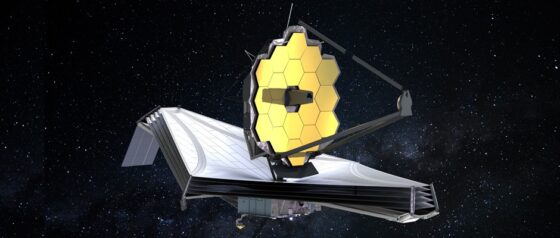
New and remarkable images released by the miraculous James Webb Space Telescope revealed new details about the Orion Nebula — located at a distance of 1,300 light-years from Earth — the brightest one in the night sky which consists of clouds of dust and gas.
Astronomers have been studying the Orion Nebula due to the wealth of celestial objects it hosts including planet-forming disks around young stars and brown dwarfs.
The astronomers Samuel G. Pearson and Mark J. McCaughrean while studying focused on the Trapezium Cluster — a young star-forming region that’s about 1 million years old — filled to the brim with thousands of new stars.
The experts also identified brown dwarfs — too small to start the nuclear fusion at their cores to become stars.
The astronomers also found for the first time a planet-like object with masses between 0.6 and 13 times the mass of Jupiter that tries to challenge some astronomical theories.
The astronomers termed them as Jupiter Mass Binary Objects or JuMBOs.
Pearson, a European Space Agency (ESA) research fellow at the European Space Research and Technology Centre in the Netherlands: “Although some of them are more massive than the planet Jupiter, they will be roughly the same size and only slightly larger.”
The astronomers found 40 pairs of JuMBOs and two triple systems, all on wide orbits around one another.
Although they exist in pairs, the objects are typically about 200 astronomical units apart, or 200 times the distance between Earth and the sun.
It can take between 20,000 and 80,000 years for the objects to complete an orbit around each other.
“The objects’ temperatures range from 1,000 degrees Fahrenheit [537 degrees Celsius] to 2,300 F [1,260 C],” Pearson said adding that the gaseous objects are young, astronomically speaking — about 1 million years old.
“We are halfway through the life of the sun, so these objects in Orion are 3-day-old babies,” said McCaughrean, senior adviser for science and exploration at the ESA.
“They’re still quite luminous and warm because the energy they have when they get created still allows them to glow, which is how we can see these things in the first place.”
McCaughrean said: “This process continues as disks of gas and dust swirl around the stars, giving rise to planets. But no existing theories explain how the JuMBOs formed, or why they’re present in the Orion Nebula.”
“Scientists have been working on theories and models of star and planet formation for decades, but none of them have ever predicted that we would find pairs of super low mass objects floating alone in space — and we’re seeing lots of them,” Pearson said.
“The main thing that we learn from this is that there is something fundamentally wrong with either our understanding of planet formation, star formation, or both.”
“The Orion Nebula is a favourite observational target of astronomers, and the larger and more sophisticated telescopes become, the more objects are revealed within the nebula,” McCaughrean said.
“While the objects we are looking at are really faint, they are brightest in the infrared, so that (is) where you have the best chance of detecting them,” Pearson told CNN.
“JWST is the most powerful infrared telescope that has ever been built and these observations simply wouldn’t be possible with any other telescope.”
“Observations of the nebula scheduled for early 2024 could provide more insight into the atmospheric compositions of the JuMBOs,” Pearson said.
“The main question is, What?! Where did that come from?” Pearson said adding that “it’s just so unexpected that a lot of future observations and modelling are going to be needed to explain it.”
,,,,,,,,,,,,,,,,,,,,,,,,,,,,,,,,,,,,,,,,,,,,,,,,,,,,,,,,,,,,,,,,,,,,
As well as scanning 13.5 billion years of activity in space, the telescope will also be aimed at the atmosphere of far-off planets, to see if they are habitable.
NASA scientists have hailed a “milestone decades in the making” as the giant mirror of its new space telescope was successfully unfurled.
The James Webb Space Telescope, which will search the cosmos for infrared light from ancient stars and galaxies, was launched from French Guiana on Christmas Day.
Over the last two days, NASA teams have remotely opened the telescope’s 6.5-metre (21ft), gold-coated mirror, which had been flat-packed into the rocket’s nose cone like a drop-leaf table, meaning it can now be prepared for its scientific missions.
Do aliens exist? The key mysteries that could be unlocked after the James Webb telescope launched
The craft, which is more powerful than its predecessor the Hubble Telescope, cost $10bn (£7.4bn) to develop, and was first put into development in 1996, funded by European, American and Canadian space agencies.
“Today, NASA achieved another engineering milestone decades in the making. While the journey is not complete, I join the Webb team in breathing a little easier and imagining the future breakthroughs bound to inspire the world,” NASA’s administrator Bill Nelson said.
“The James Webb Space Telescope is an unprecedented mission that is on the precipice of seeing the light from the first galaxies and discovering the mysteries of our universe.
“Each feat already achieved and future accomplishment is a testament to the thousands of innovators who poured their life’s passion into this mission.”
Now opened up, it will next undergo the first of three course-correction burns, which will place it in its exact orbit position around the second Lagrange point – almost one million miles from Earth.
Over the course of the next few months, the telescope will move adjust its mirror segments, with the team on Earth remotely controlling the 126 actuators on the rear of each mirror segment.
Gregory L Robinson, the programme’s director at NASA, said: “The successful completion of all of the Webb Space Telescope’s deployments is historic.
“This is the first time a NASA-led mission has ever attempted to complete a complex sequence to unfold an observatory in space – a remarkable feat for our team, NASA, and the world.”
As well as scanning 13.5 billion years worth of activity in space, the telescope will also be aimed at the atmosphere of far-off planets, to see if they are habitable.
James Webb was chief of NASA during most of the agency’s formative decade of the 1960s.